
Unsafe Cladding Remediation Gains Confidence, Clarity and Momentum
How proposed cladding legislation, NASC-backed regulatory clarification and industry collaboration could help accelerate the remediation of unsafe buildings.
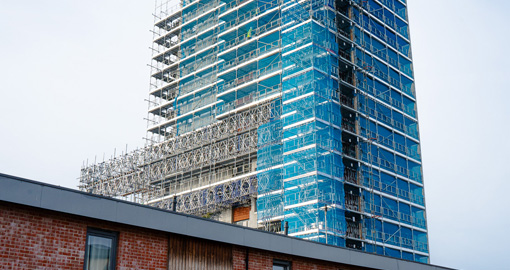
When Construction Enquirer recently reported on the proposed Remediation of Unsafe Cladding Bill (see further information), it was particularly pleasing to see the feature illustrated with an image of Parkside Court, one of the flagship remediation projects delivered by Inner City Scaffolding in partnership with Mulalley.
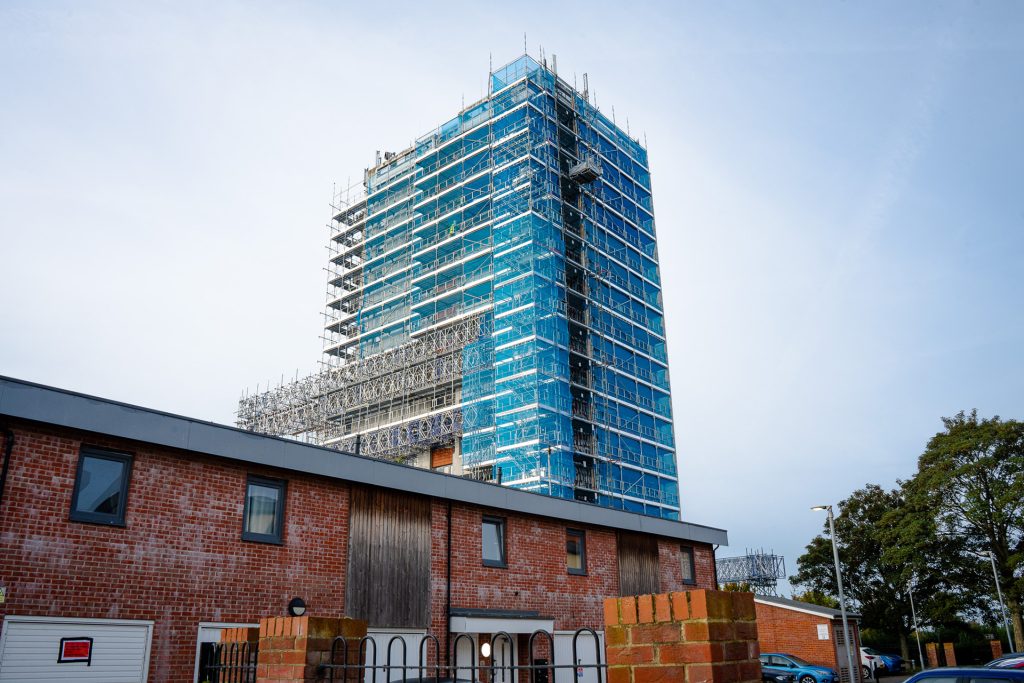
While the image itself was a proud moment for our team, the significance of the story extends far beyond a single project.
Taken together with recent clarification regarding temporary works under the Building Safety regime, the proposed legislation signals a potentially important shift for the remediation sector. Greater certainty around project delivery, improved confidence in cost recovery and clearer regulatory interpretation could help remove some of the barriers that have slowed the remediation of unsafe buildings across the UK.
Most importantly, these developments have the potential to support a faster route to safer homes for residents.
A Positive Step Towards Accelerating Remediation
The proposed Remediation of Unsafe Cladding Bill seeks to strengthen the ability of contractors and developers to recover remediation costs where defective products or materials have contributed to building safety issues.
This is a significant development.
For many organisations involved in remediation programmes, the challenge has not simply been undertaking the work itself. It has been navigating the financial risk associated with complex projects where liability and cost recovery can be difficult and time-consuming to establish.
By improving the route to recovery where responsibility can be evidenced, the Bill has the potential to give greater confidence to those undertaking essential remediation works.
Government ministers have stated that the legislation could accelerate repairs for approximately 12,000 residents, including around 3,000 whose buildings may otherwise never be remediated. The wider objective remains that every residential building over 11 metres with unsafe cladding should either be remediated or have a clear completion date by the end of 2029.
Whilst the practical impact of the legislation will only become apparent over time, the direction of travel is a positive one: removing obstacles that stand between unsafe buildings and their remediation.
Clarity Around Temporary Works Matters
At the same time, the industry has recently welcomed greater clarity around the status of scaffolding and temporary works under the Building Regulations.
Following clarification highlighted by NASC, scaffolding and temporary works are not classified as “building work” under the Building Regulations, helping to address uncertainty that has existed across some projects and procurement processes.
This is an important distinction.
It does not reduce the responsibility placed upon scaffolding contractors. Temporary works remain subject to comprehensive health and safety legislation, competent design, rigorous inspection regimes and established industry standards.
What it does provide is greater certainty for clients, developers and principal contractors when planning remediation programmes.
For access providers such as Inner City Scaffolding, clarity helps ensure solutions can be designed, erected and dismantled in alignment with programme requirements without unnecessary regulatory confusion, while maintaining the highest standards of safety and compliance.
The Combined Impact Could Be Significant
Viewed independently, both developments are positive.
Viewed together, they become even more significant.
The remediation sector benefits when barriers are removed at every stage of project delivery.
Confidence in recovering justified remediation costs encourages investment and commitment to programmes of work.
Clarity around temporary works supports more efficient planning and mobilisation.
Continued improvements to regulatory processes have the potential to reduce delays that many in the industry have experienced since the introduction of the new Building Safety regime.
Collectively, these factors can help move projects from planning into delivery more efficiently and ultimately accelerate building safety improvements.
Lessons from Parkside Court
At Inner City Scaffolding, we have experienced first-hand the complexity of delivering major remediation projects.
Our work at Parkside Court, undertaken alongside Mulalley, demonstrated the importance of collaboration between remediation specialists, access contractors and wider project stakeholders.
Projects of this nature require far more than simply providing access.
They demand detailed planning, programme integration, resident consideration, engineering expertise, robust safety management and the flexibility to respond to evolving project requirements.
The recent recognition of the project through our NASC Category Award reinforces the value that specialist access contractors can bring to successful remediation programmes.
We are also grateful to Mulalley for bringing this latest legislative development to our attention and for their continued contribution to improving standards across the sector.
Looking Forward
The remediation of unsafe cladding remains one of the most important challenges facing the construction industry.
There is no single solution that will unlock every project or eliminate every delay. However, progress is often achieved through a series of improvements that collectively create momentum.
The proposed Remediation of Unsafe Cladding Bill, combined with greater clarity around temporary works and continued efforts to improve the efficiency of approval processes, represents another positive step forward.
For residents, it means a clearer pathway towards safer homes.
For the industry, it creates greater confidence to invest, plan and deliver.
And for all those involved in remediation, it reinforces a shared objective: accelerating the creation of safer buildings throughout the UK.
Further information
- Construction Enquirer: Contractors get easier route to claw back recladding costs
- NASC: No space? No problem: Inner City Scaffolding at Parkside Court
- NASC: Government confirms scaffolding is outside the scope of the Building Safety Act
- UK Parliament: Building Safety (Remediation of Unsafe Cladding etc) Bill
- GOV.UK: Guide to the Building Safety (Remediation of Unsafe Cladding etc) Bill
- Mulalley
Planning your next project?
Speak to our team about bespoke access solutions engineered for safety, efficiency, and programme certainty.
